

Senator Uche Ekwunife: The Politics of Impact, Compassion and Courage
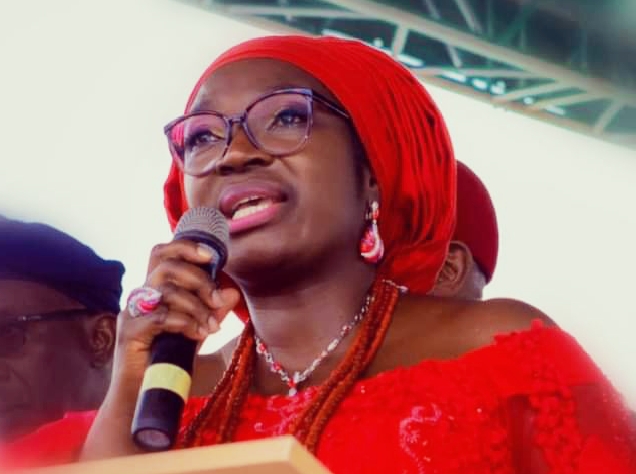
Senator Uche Ekwunife
By Titus Eleweke
When public service is measured not only by the offices occupied, but by the lives touched
In Nigerian politics, public office is often discussed in the language of power: positions won, influence acquired, alliances built and elections contested.
Yet there is another, more enduring way to judge political leadership,by asking a deceptively simple question: What difference did the politician make in the lives of the people?
It is through that lens that the political journey of Senator Uche Lilian Ekwunife, popularly known as Iyom Uche Ekwunife, deserves serious consideration.
Her story is not merely that of a woman who entered politics, won elections and occupied important public positions. It is the story of a politician who has navigated the difficult terrain of Nigerian politics with unusual persistence, experienced both triumph and disappointment,built a formidable grassroots following, and, above all, cultivated a public identity closely associated with philanthropy, empowerment and community development.
Ekwunife’s journey,from banking into elective politics, from the House of Representatives to the Senate, and from electoral setbacks back into public relevance,offers a useful case study in political resilience and the evolving role of women in Nigerian public life.
But her most compelling political argument may not be found in the titles she has held.
It lies in the relationship she has built with ordinary people.
From Banking to the Political Arena
Before entering politics, Ekwunife established herself in the banking sector, reportedly rising to management level.
Her professional experience in finance and administration provided a foundation for her transition into the considerably more unpredictable world of politics.
In 2007, she was elected to represent the Anaocha/Njikoka/Dunukofia Federal Constituency in the House of Representatives. She was re-elected in 2011, giving her two terms and eight years of experience in the lower chamber of the National Assembly.
That achievement is significant in its own right.
Nigerian politics has historically been dominated by men, and women who seek to establish durable political careers frequently confront structural, financial and cultural barriers that their male counterparts may not encounter to the same degree.
Ekwunife’s rise therefore carries significance beyond her individual political ambition. It represents the capacity of Nigerian women to compete, negotiate, legislate and remain relevant in an environment that can be exceptionally unforgiving.
Her political career eventually took her to the Senate, where she represented Anambra Central. Her 2015 election was subsequently nullified following a legal challenge, after which Victor Umeh emerged from the resulting electoral process.
Rather than withdraw permanently from public life, Ekwunife returned to the Senate in 2019 after defeating Umeh in the Anambra Central contest.
That episode is central to understanding her political character.
The Politics of Resilience
Politics tests more than popularity. It tests temperament.
Few things expose a politician’s character more clearly than defeat. Victory creates admirers; adversity reveals stamina.
Ekwunife has experienced both sides of that political equation. She has contested major elections, endured political realignments, faced legal challenges and suffered setbacks that could easily have ended a less determined political career.
Instead, she regrouped.
Her return to the Senate in 2019 was therefore more than another electoral victory. It demonstrated an important quality in political leadership,the ability to treat defeat as an event rather than a permanent identity.
That resilience has particular significance for women in politics. In a political system where women’s participation remains comparatively limited, the ability of a woman to survive electoral setbacks, rebuild political networks and return to national office is itself a form of political testimony.
Ekwunife’s career consequently challenges the assumption that political relevance must follow a straight line.
Sometimes, the road to political significance is marked not only by victories, but also by the courage to begin again.
Beyond the Ballot: The Politics of Impact
The strongest argument made by Ekwunife’s admirers is that her politics has never been confined to election seasons.
Her public profile has long been associated with interventions directed at women, young people, widows, vulnerable families and communities.
Reports have attributed to her a range of empowerment initiatives, skills-acquisition programmes, employment facilitation and community-development interventions.
The Sun, for example, reported that she had supported widows with houses and promoted extensive empowerment initiatives for women and youths.
These claims should, as with any account of political achievement, be assessed critically and distinguished from independently verified government expenditure or project-completion records. But they remain important to understanding why she has developed such a strong grassroots identity.
There is a broader philosophical point here,one that goes beyond Ekwunife herself.
Politics becomes meaningful when citizens can connect public authority to improvements in their everyday lives.
A road is not merely a constituency project to the farmer who needs to transport produce to market.
A renovated school is not simply an item in a government budget to the child who now learns in a safer and more dignified environment.
A skills-acquisition programme is not merely a political event to the young person who acquires the capacity to earn an income.
And a grant or economic intervention is not merely philanthropy to a woman who uses it to establish a sustainable livelihood.
This is the deeper meaning of grassroots politics, translating the abstract language of government into tangible human outcomes.
Representation Is More Than Legislation
There is sometimes an unfortunate tendency to measure legislators only by the number of bills they sponsor or the speeches they deliver on the floor of Parliament.
Those things matter.But representation is broader.
A legislator is also expected to identify the needs of constituents, advocate for them within government, facilitate legitimate development interventions, monitor public programmes and maintain a meaningful connection with the communities whose interests they represent.
This distinction is important when evaluating Ekwunife’s record.
Various reports have associated her periods of legislative representation with roads, community infrastructure, empowerment programmes and other interventions.
A constituency-project database, for example, lists projects associated with her representation in Anambra Central involving poverty alleviation, youth training, solar infrastructure and empowerment initiatives.
The appropriate conclusion, however, is not that a legislator personally constructs every project associated with his or her constituency. That would misunderstand how public administration works.
The more defensible argument is that an effective legislator can facilitate, advocate, attract and monitor public investment in response to identifiable community needs.
By that standard, Ekwunife’s supporters can reasonably point to a development-oriented dimension of her representation.
Women, Youths and the Meaning of Empowerment
Perhaps no area better illustrates the humanitarian dimension of Ekwunife’s public image than her emphasis on women and young people.
Nigeria cannot achieve inclusive development if large sections of its population remain economically dependent or excluded from meaningful participation in decision-making.
Empowerment, therefore, should not be understood simply as the distribution of temporary assistance.
Its real value lies in what happens afterwards.
When a woman receives support that enables her to establish a small enterprise, the intervention has the potential to create independence.
When a young person acquires a marketable skill, the benefit can extend beyond the individual to the family and the wider community.
When an unemployed person gains access to an economic opportunity, the result can be dignity, confidence and reduced dependence on political patronage.
The best form of political compassion is not perpetual dependency. It is the creation of pathways through which people can increasingly stand on their own.
This is why Ekwunife’s reported emphasis on skills acquisition, entrepreneurship, and youth and women empowerment is an important component of her public-service narrative.
The title Iyom has also become strongly associated with Ekwunife’s grassroots political identity. Accounts of her political career have repeatedly emphasised her accessibility and connection with ordinary people.
The Guardian, for instance, described her as having developed a strong relationship with the masses during her years in the House of Representatives and Senate.
This aspect of politics is often underestimated.
Institutions matter. Policies matter. Budgets matter. Legislation matters.
But people also remember how political leaders made them feel.
They remember the representative who listened.
They remember the politician who came when a family was in difficulty.
They remember the person who helped a child remain in school.
They remember the intervention that enabled a small business to survive.
They remember the road that connected their community to a larger economic network.
And they remember whether their elected representative remained accessible after the election.
Political legitimacy is therefore not created only in Parliament. It is also created through the accumulated memory of citizens.
That may explain why some politicians maintain significant political relevance even after leaving office.
From Constituency Politics to Regional Leadership
Ekwunife’s political experience has also extended beyond the immediate boundaries of electoral representation.
She has served as Director-General of the South-East Governors’ Forum, placing her in a regional policy environment concerned with issues such as infrastructure, economic cooperation, transportation, energy and development.
This represents an important progression.
A politician who begins with constituency representation must eventually confront questions that cannot be solved at constituency level.
How does the South-East improve its infrastructure?
How can its economic potential be better integrated?
How can regional cooperation become more effective?
How can political leadership move from individual projects to institutional development?
These are the questions that separate the politics of immediate intervention from the politics of long-term transformation.
Ekwunife’s trajectory therefore provides evidence of a political career that has operated at several levels,community, constituency, state, national and regional.
The Need for Accountability
An honest assessment of any political career must make room for criticism.
Ekwunife’s career has not been free of controversy. Her political realignments and fierce electoral battles have attracted criticism, just as they have attracted loyal supporters.
That should not be ignored.
Neither should admiration become a substitute for accountability.
A politician should be praised where evidence supports praise, questioned where questions are justified, and judged by the totality of his or her record rather than by partisan loyalty or partisan hostility.
This is particularly important when discussing philanthropy and constituency projects.
The relevant questions should always include:
What was delivered? Who benefited? Was the intervention sustainable? Was public money properly used? Did the intervention address a genuine community need? Did it create lasting value?
These questions do not diminish humanitarian politics.
Indeed, the highest form of political praise is not unquestioning praise. It is the recognition of achievement alongside a demand for transparency, accountability and higher standards.
A Larger Question About Public Service
The significance of Uche Ekwunife’s political career ultimately extends beyond one politician or one senatorial district.
It speaks to a larger question about what Nigerians expect from public office.
Should political leadership be measured only by electoral victory?
Or should the measure also include the communities transformed, the young people empowered, the women supported, the vulnerable protected and the institutions strengthened?
Ekwunife’s supporters see in her career a politician who has combined electoral competitiveness with grassroots engagement, legislative experience with philanthropy, and political ambition with a demonstrated desire to remain connected to ordinary citizens.
The Presidency itself, in congratulating her on her 55th birthday in December 2025, described her public endeavours in terms of resilience, service, development and empowerment, while noting her career from banking through the House of Representatives and the Senate.
That recognition does not settle every argument about her record. But it reinforces the broader point: her political career has become significant enough to be understood not merely as a sequence of elections, but as a sustained engagement with public life.
The Case for Service Beyond Office
There is an important distinction between holding office and being useful to society.
A person can hold high office and leave little behind.
Another can lose office and remain deeply relevant because the relationships, institutions and human investments created during public service continue to have meaning.
This is where Ekwunife’s political story becomes particularly compelling to those who admire her.
Her greatest political asset may not be a party platform, a title or even an electoral history.
It is the human network she has built over decades.
People are more likely to remain connected to leaders when they believe those leaders were genuinely connected to them.
That is why political loyalty can sometimes survive party changes, electoral defeats and periods outside elected office. Political parties may change. Alliances may shift. Electoral fortunes may rise and fall.
But the memory of service can endure.
The Measure That Matters
Ultimately, the most important question about Uche Ekwunife is not whether every decision she has made in politics was perfect.
No serious assessment of public leadership should demand perfection.
The better question is whether her years in public life have produced meaningful value for society,and whether the experience, resilience and commitment she has accumulated can still be deployed in the service of the people.
By the evidence of her legislative career, her political survival, her grassroots engagement and the numerous empowerment and development initiatives associated with her public profile, her admirers have substantial reasons to regard her as a politician whose career has been defined by more than the pursuit of office.
Her story is, in many respects, a story about the changing possibilities for women in Nigerian politics.
It is also a story about resilience.
But above all, it is a story about a fundamental principle:
Political power acquires its greatest legitimacy when it is converted into public value.
That is the enduring argument behind the admiration for Iyom Uche Ekwunife.
Not that she has never stumbled.
Not that she has never faced criticism.
Not that every political choice she has made should escape scrutiny.
Rather, it is that she has remained engaged, remained resilient and, in the judgment of many people who have followed her career, remained committed to the human beings behind the statistics of elections and the abstractions of government.
In the final analysis, the true measure of a political career is not how loudly a politician speaks about the people, nor simply how many elections the politician wins.
It is what remains in the lives of the people after the political noise has faded.
A road that opens an economic pathway.
A school improved for children.
A widow restored to dignity.
A young person equipped with a skill.
A woman enabled to build a livelihood.
A community that feels seen.
A citizen who believes that government has not completely forgotten him or her.
These are the things that give political service its human meaning.
And for those who have witnessed or benefited from the interventions associated with Senator Uche Lilian Ekwunife, her journey represents a powerful proposition: that politics, at its best, is not merely the competition for power. It is the responsibility to use power in the service of humanity.
That, ultimately, is the most compelling case for remembering Iyom Uche Ekwunife,not simply for the offices she occupied, but for the lives she sought to touch, the people she sought to empower, and the enduring belief that public service should leave society better than it found it.