





Anambra Keke Drivers Warn of Tension, Seek January 2027 Enforcement Extension
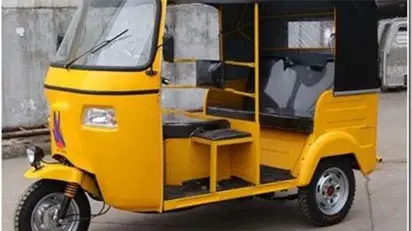
Tricycle operators in Anambra State, under the auspices of the Anambra State Keke Drivers Forum (AKDF), have appealed to the Anambra State Government to extend the enforcement deadline for Keke riders’ permits, renewal of vehicle particulars and the regularisation of vehicles operating with fake or unverified plate numbers.
In a statement issued by the Chairman of AKDF, Anambra State, Comrade Ifeanyi Okafor, the association said the appeal followed consultations with stakeholders in the Keke industry and was necessary to prevent unnecessary tension and ensure that operators are given adequate opportunity to comply with the government’s requirements.
Okafor said the leadership of AKDF, after extensive consultations with stakeholders, considered it important to passionately appeal to the Anambra State Government, the Ministry of Transport, the Anambra Internal Revenue Service (AIRS), the Ministry of Information, enforcement teams and all security agencies in the state to extend the enforcement of the following requirements:
Keke riders’ permits;
Renewal of Keke vehicle particulars; and
Verification and regularisation of vehicles with fake or unverified plate numbers.
According to Okafor, the association had previously written to the Commissioner for Transport concerning what it described as an unexplained increase in the cost of obtaining the Keke riders’ permit by the Vehicle Inspection Officers (VIO).
“We appeal to the Honourable Commissioner for Transport to direct the VIO to commence the processing of the permits at the government-approved price so that we can properly instruct our members to obtain them.
“The VIO should not decide that because we cannot afford to pay additional charges, we process the permit online by ourselves and still return to their office for approval and capturing, for which they continue to collect N2,000 or more.
“We consider this an abuse of the process and a hindrance to compliance.
“If the VIO does not want to process the permits directly and wants applicants to complete the process online by themselves, then all stages of the process, including capturing and approval, should be made available online. All that is required is the proper configuration of the system to ensure transparency, efficiency and security.
“The reality is that about 90 per cent of Keke drivers are waiting for the VIO to begin processing the permits at the government-approved price. Commencing enforcement when we all know that the actions of some VIO personnel have prevented thousands of drivers from obtaining the permits could cause unnecessary tension and a serious breach of peace in the state,” he said.
On the renewal of vehicle particulars, the AKDF chairman said about 90 per cent of Keke drivers were currently facing various challenges in renewing their documents, particularly because many had operated for a long period without renewing their particulars.
According to him, the situation is largely connected to the hire-purchase system under which many Keke are acquired.
“Due to the hire-purchase system in the Keke business, most Keke are purchased and registered in the names of the original owners.
“Many drivers who have completed their agreed hire-purchase payments are unable to renew their vehicle particulars because the renewal process requires the National Identification Number (NIN) of the original owner, as well as documentation proving that the hire-purchase agreement has been fully settled.
“This particular challenge is preventing a significant number of Keke drivers from renewing their vehicle particulars.
“Some drivers, either out of ignorance or for one reason or another, did not collect their documents from their former bosses. Some have lost their documents, while others have had their documents damaged by rain or water.
“As Chairman of AKDF, I personally became aware of the extent of these challenges when I went around to meet and encourage some drivers to renew their vehicle particulars.
“In view of these challenges, it is important to give the drivers sufficient time to resolve their documentation issues. The drivers are willing to comply with the requirements, but many are currently restricted by circumstances beyond their immediate control.
“Enforcement at this point will definitely not produce a positive result,” he said.
On the issue of fake plate numbers, Okafor said the AKDF had initially resolved not to intervene in cases involving fake plate numbers because the association considered the use of forged registration numbers a criminal act.
However, he said the association was compelled to revisit its position after an incident at one of its meetings.
“Our resolution was affected by a discovery made at the meeting venue.
The statement reads in parts:
“What happened that day was that one man asked someone with access to the FRSC NVIS application to check his plate number. Shockingly, for the first time in many years, he discovered that the plate number on his Keke was fake.
“This discovery led to the checking of the plate numbers of other Keke operators at the venue, and many of them also discovered that their numbers were fake, despite having paid the full amount required for original plate numbers.
“This development prompted us to commence an investigation, and after examining the issue over the past week, we made the following discoveries:
“First, about 90 per cent of those using fake plate numbers are reportedly unaware that their numbers are fake. In many cases, they are victims of circumstances.
“Most of them obtained their plate numbers through the companies or dealers from whom they purchased their Keke. The dealers were assumed to be working with the relevant licensing authorities, and some operators were actually given what they believed to be genuine plate numbers by those dealers.
“We also discovered cases in which operators obtained their plate numbers through government licensing offices, only to later discover that the numbers were fake.
“This raises serious questions about the process. Where genuine plate numbers are scarce, unscrupulous licensing officers or their agents may collect the full amount for an original plate number and subsequently issue a fake one to unsuspecting applicants.
“Furthermore, AIRS and UHBET have, in our view, contributed to the problem of fake plate numbers, particularly in cases involving individuals who deliberately resorted to using fake numbers.
“We discovered that those who intentionally use fake plate numbers did so for different reasons.
“First, some opted for fake plate numbers because they were cheaper at the time they registered their Keke. Since there was little or no enforcement at the time, they continued to use them.
“Second, some resorted to fake plate numbers after their genuine registration numbers had accumulated significant tax liabilities.
“Third, some operators said they resorted to fake plate numbers after discovering that their accounts had accumulated what they considered to be outrageously high tax debts. According to them, attempts to reconcile the discrepancies with the relevant government authorities failed, leaving them to resort to fake numbers at the time.
“While we, as the leadership of AKDF, completely condemn the deliberate use of fake plate numbers because it is unlawful, we are also concerned about the role of government agencies and officials in the circumstances that enabled some of these irregularities to occur.
“How can people be registered into the government’s tax system using questionable or fake plate numbers, only for the same government to turn around and begin arresting the people who were registered through that process?
“If any enforcement action is to be taken against operators who knowingly use fake plate numbers, there should equally be an investigation into the officials, agents or processes through which such irregular registrations were facilitated. Justice and fairness require that responsibility be properly established on all sides.
“We therefore appeal to the relevant government authorities to give Keke drivers adequate time to resolve these issues and regularise their documentation in the interest of peace and stability in Anambra State.
“I would personally advise the government to direct its enforcement teams to extend the enforcement deadline until January 2027.
Reasons for the Proposed Extension
“My reasons are as follows:
“First, this is the first time in the history of Anambra State that an enforcement exercise of this magnitude is being contemplated, with approximately 60,000 Keke operators potentially affected.
“Second, although these issues have been raised by the government at various times, it was only about a month ago that Keke drivers finally agreed to comply with the government’s demands.
“In the past, many of us resisted some of these requirements because Keke operation is a means of livelihood and survival for thousands of families. We have always maintained that operators in this sector deserve adequate palliative measures and support from the government.
“Third, we are relying on the promise made by our amiable governor before the implementation of the current tax regime that once Keke operators paid their taxes, they would not be subjected to additional financial burdens.
“Fourth, while we acknowledge that the requirements being demanded are legal and constitutional, they do not in any way negate our tax obligations. Keke operators have been operating for years without some of these documents, and the process of regularising them requires adequate preparation and a realistic transition period.
“The major concern now is the enforcement process itself. There is a widespread fear among Keke operators that some enforcement personnel may take advantage of the exercise to extort money from drivers.
“Honestly speaking, embarking on enforcement at this time would be poorly timed. Based on the reactions and responses I have been receiving from the field, the exercise could be met with serious resistance and hostility, potentially resulting in a serious breach of peace across the state.
“We therefore appeal to the government to conduct further consultations and make proper enquiries from the field before commencing full enforcement.
“The government should engage directly with Keke operators and other stakeholders to understand the practical challenges they are facing and establish a clear, transparent and achievable compliance framework.
“AKDF remains committed to working with the Anambra State Government and all relevant agencies to ensure that Keke operators comply with lawful government requirements. However, compliance must be achieved through transparency, fairness, adequate sensitisation and sufficient time for operators to regularise their documents.
“We believe that extending the enforcement period until January 2027 will provide an opportunity for the government and Keke operators to resolve the outstanding issues without unnecessary tension, while also ensuring that the state’s regulatory and revenue objectives are achieved peacefully.”