

Attack on Minister Ekpo Over Alleged Ethnic Discrimination Unfortunate — Elder Statesman
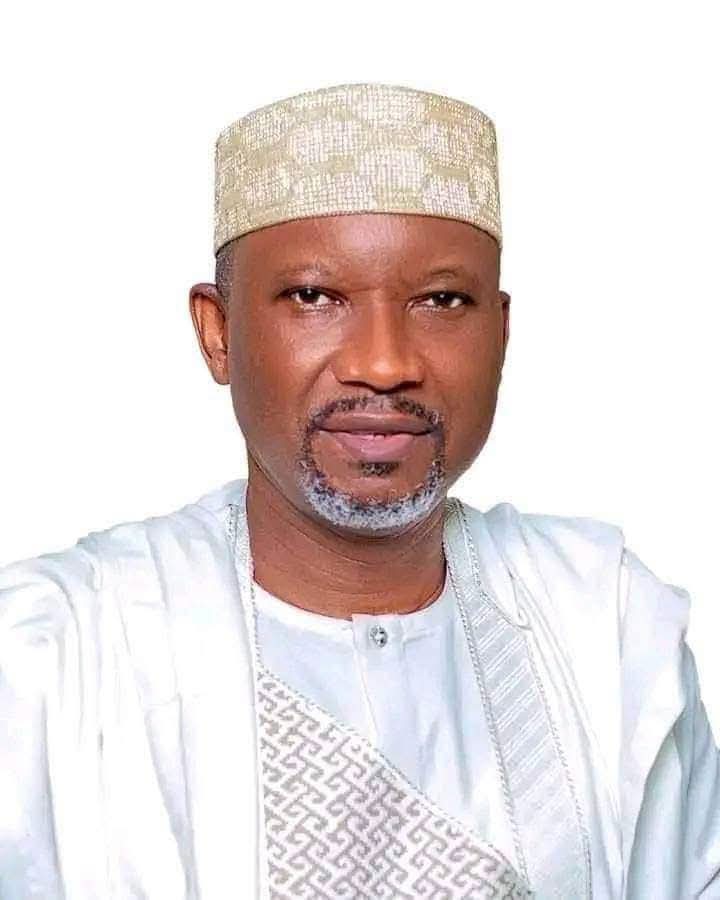
A grassroots politician and former Chairman of Urueofong-Oruko Local Government Area of Akwa Ibom State, Chief Edet Isong, has joined the growing trend of condemnations trailing remarks by the apex Ibibio socio-cultural youth group, Mboho Mkparawa Ibibio (MMI), accusing the Minister of State for Petroleum Resources (Gas), Ekperikpe Ekpo, of discriminating against Ibibios in the allocation of jobs and projects as a minister.
Describing the remarks against the minister as a case of misdirected aggression, the elder statesman, in an interview in Uyo, the state capital, challenged the organisation to publish the employment scorecards of past ministers from other ethnic nationalities in the state since 1999 for effective comparison.
Chief Isong said it was particularly disturbing that such a narrative was being promoted at a time when the administration of Governor Umo Eno was working assiduously to build bridges across ethnic, senatorial, political and local government divides and strengthen the unity of Akwa Ibom State.
According to him, Akwa Ibom does not need the politics of ethnic suspicion at this point, wondering why the group would want to plunge the state into an unnecessary ethnic crisis at a time of heightened political activity.
Chief Isong said MMI’s position raises a fundamental question regarding where the organisation was when previous ministers and other federal appointees from Akwa Ibom were facilitating,or not facilitating,employment opportunities for Akwa Ibom people.
“If MMI is genuinely concerned about equitable employment opportunities for Akwa Ibom people, let them publish the employment scorecards of ministers from Akwa Ibom since 1999.
“Let them tell Akwa Ibom people how many persons each minister facilitated into the Federal Civil Service, federal agencies, boards, commissions and other government institutions.
“Let them show us the distribution by senatorial district and local government area. Let us put the records side by side and have an honest conversation.
“We did not hear this kind of agitation from MMI when successive ministers held powerful federal portfolios. We did not hear them demanding a senatorial breakdown of employment opportunities or asking whether appointments were evenly distributed across the three senatorial districts,” he noted.
Chief Isong, who decried the acerbic language used in labelling the minister, noted that it was capable of creating unnecessary suspicion among Akwa Ibom people.
He particularly objected to the suggestion that a minister’s efforts to facilitate employment opportunities for people from his senatorial district should automatically be interpreted as an attempt to appropriate federal opportunities for his locality.
“A person does not cease to be an Akwa Ibom person because he comes from Ikot Ekpene Senatorial District. Neither does an opportunity given to an indigene of Ikot Ekpene become an opportunity stolen from Ibibio people.
“Akwa Ibom has three senatorial districts. We have different ethnic groups, clans, local governments and communities. But we have one state.
“The danger is that if every intervention is interpreted through an ethnic lens, we will eventually create a situation where every public officer is forced to defend himself against allegations of ethnic favouritism simply because some beneficiaries happen to come from his area,” he stressed.
He pointed out that the MMI remarks were coming at a particularly sensitive time when Governor Umo Eno had consistently preached peace, unity, inclusion and development across the state.
The governor’s approach, he added, had been to build an Akwa Ibom where people from different senatorial districts could identify with government and where political differences would not become ethnic divisions.
“It is therefore wrong for anybody or any organisation to stoke ethnic fire in Akwa Ibom at a time when the governor is working so hard to build a united state.
“We must be careful about the kind of narratives we put into the public space. We cannot be preaching unity on the one hand and, on the other hand, encouraging our people to view every government intervention through an ethnic or senatorial prism.
“Governor Umo Eno’s message has been very clear: Akwa Ibom belongs to all of us. That message should be supported by all responsible individuals and organisations,” he cautioned.