
Awka Roads: Government House Route Shines, Inner Roads Rot, Deplorable
By Our Correspondent
The only visibly well-maintained and easily motorable road in Awka, the Anambra State capital, is the route leading to the newly built Government House and Lighthouse area, residents have alleged.
For residents of Awka, navigating several parts of the state capital has increasingly become an exercise in patience, caution and frustration, with numerous inner roads described as deplorable despite the city’s growing profile as the administrative centre of Anambra State.
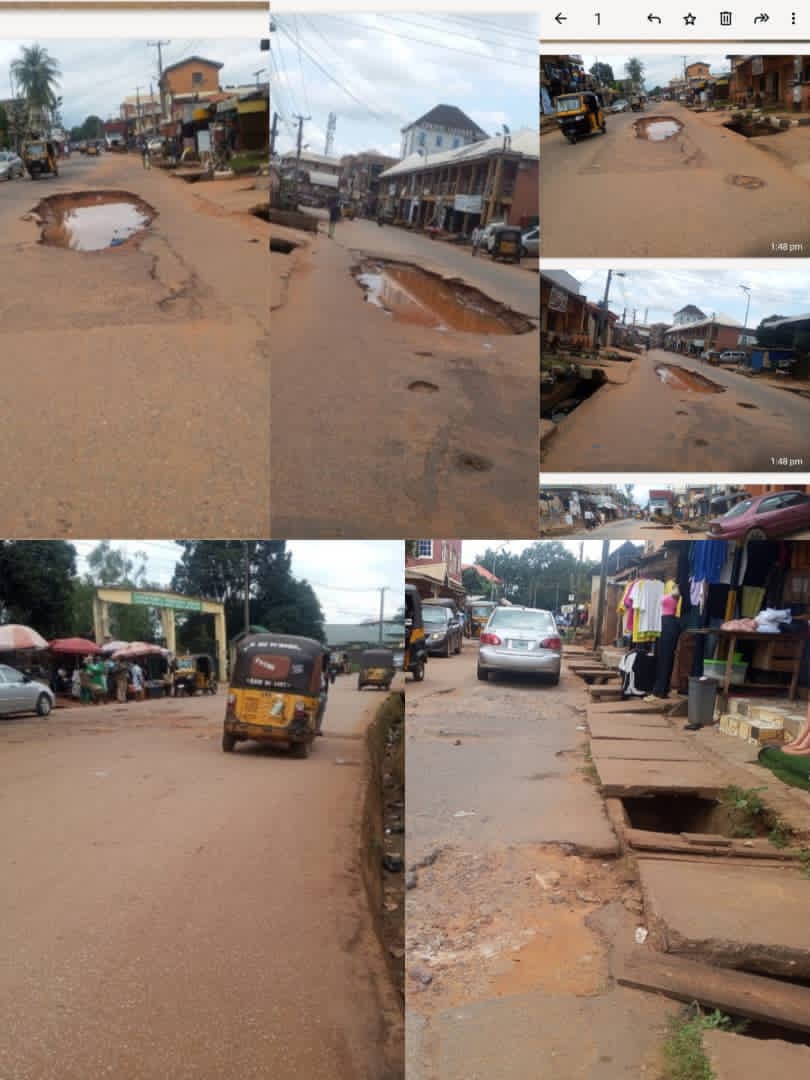
Our correspondent, who moved around parts of the city on Monday following complaints from residents, commuters, tricycle operators and bus drivers, observed deep potholes, erosion, muddy surfaces and damage associated with flooding on several inner roads.
Residents expressed particular concern over roads serving densely populated neighbourhoods, arguing that the condition of such roads do not reflect the level of development expected of a state capital.
“Awka is becoming difficult to move around,” said a resident, Anayo Eze.
Emeka Nwogu appealed to Governor Chukwuma Soludo to give greater attention to the city’s inner roads, insisting that urban renewal should not focus only on major roads and government-facing projects.
“Awka is the capital of the state. People should be able to move freely within the city without having to struggle through bad roads,” Nwogu said.
A Keke driver, Akunna John, said the poor condition of the roads had increased transportation costs and vehicle maintenance expenses.
He urged the government to undertake a comprehensive assessment of the city’s inner roads before they become completely impassable.
He said many Keke operators, who had initially welcomed the good roads constructed by the Soludo administration, were now disappointed that some of the roads had deteriorated.
“Today, we are finding it difficult to ply the roads, as almost all the inner roads in Awka are bad. Because of this, we have returned to our frequent visits to mechanics,” he said.
Residents further said the problem goes beyond potholes. They identified flooding and the alleged obstruction of natural waterways by buildings and other structures as major contributing factors to the deterioration of roads across the capital city.
“Repairing roads without addressing drainage and water-flow problems amounts to treating the symptoms while leaving the cause untouched,” said Sunday Okeke.
One of the areas visited was the route from the fruit market behind the old Anambra State Government House towards the Commissioners’ Quarters, where several senior government officials reside, including the Deputy Governor, Secretary to the State Government, Speaker of the State House of Assembly and commissioners.
Residents questioned why roads in such a strategically important area should remain in poor condition, particularly when roads around the newly built Anambra State Lighthouse, which houses the Government House and the governor’s official residence, are in good shape.
The Aroma-Amaku corridor also came under criticism. Residents said the roads linking Aroma to the Chukwuemeka Odumegwu Ojukwu University Teaching Hospital, Amaku, serve thousands of commuters and patients but remain difficult to navigate.
“A pregnant woman going for antenatal care on this road could go into induced labour because of the poor state of the road,” one resident remarked.
Similar complaints were made about roads linking Kwata Junction to Obunagu and the SMO Okeke axis.
On Arthur Eze Road, which links the Enugu-Onitsha Expressway to the popular Eke Awka Main Market through the UNIZIK TempSite Junction, the story is no different.
Residents expressed frustration over deep potholes that impede the free flow of traffic. A commuter, Pius Ojukwu, simply described the road as “Golgotha.”
Ngozi Nwokike said the government needed to investigate the causes of recurring flooding rather than simply carrying out patchy repairs on damaged roads.
“Where natural water channels have been blocked, simply constructing a new road or carrying out repairs may not solve the problem. The water will return and destroy the road again,” she said.
Residents also raised questions about who approved buildings allegedly constructed on or close to natural waterways. They called for greater transparency in building approvals and stronger enforcement of physical planning and environmental regulations.
They urged the Soludo administration to adopt an integrated approach involving road rehabilitation, drainage reconstruction, desilting of waterways, removal of obstructions and enforcement of town planning laws.
For the residents, Awka needs more than impressive government buildings. It needs functional neighbourhood roads, effective drainage systems and a sustainable urban planning strategy capable of preventing the recurring cycle of flooding, erosion and road deterioration.
Repair Comes After Insideoutnews Report
Following the report by Insideoutnews that the road leading to the Deputy Governor’s residence had been cut off at the Commissioners’ Quarters, the relevant authorities reportedly moved in to repair the damaged portion.
While residents may welcome the intervention, concerns remain that the repair could amount to a cosmetic solution if the underlying causes of the recurring flooding and erosion in the Commissioners’ Quarters and surrounding areas are not addressed.
Residents and other stakeholders have pointed to poor environmental planning, alleged approval of inappropriate building plans, obstruction of waterways and blocked drainage channels as issues requiring urgent attention.
Without addressing these underlying problems, they fear that newly repaired roads could once again be damaged by flooding and erosion.
The concern, therefore, is not merely about fixing a particular bad stretch of road, but about whether Awka’s road infrastructure is being planned and maintained as part of a broader, functioning urban drainage and environmental management system.