




EDITORIAL: Uturu Must Stop Apologising for Its Identity
Culture Is Not Decoration; It Is the Identity of a People
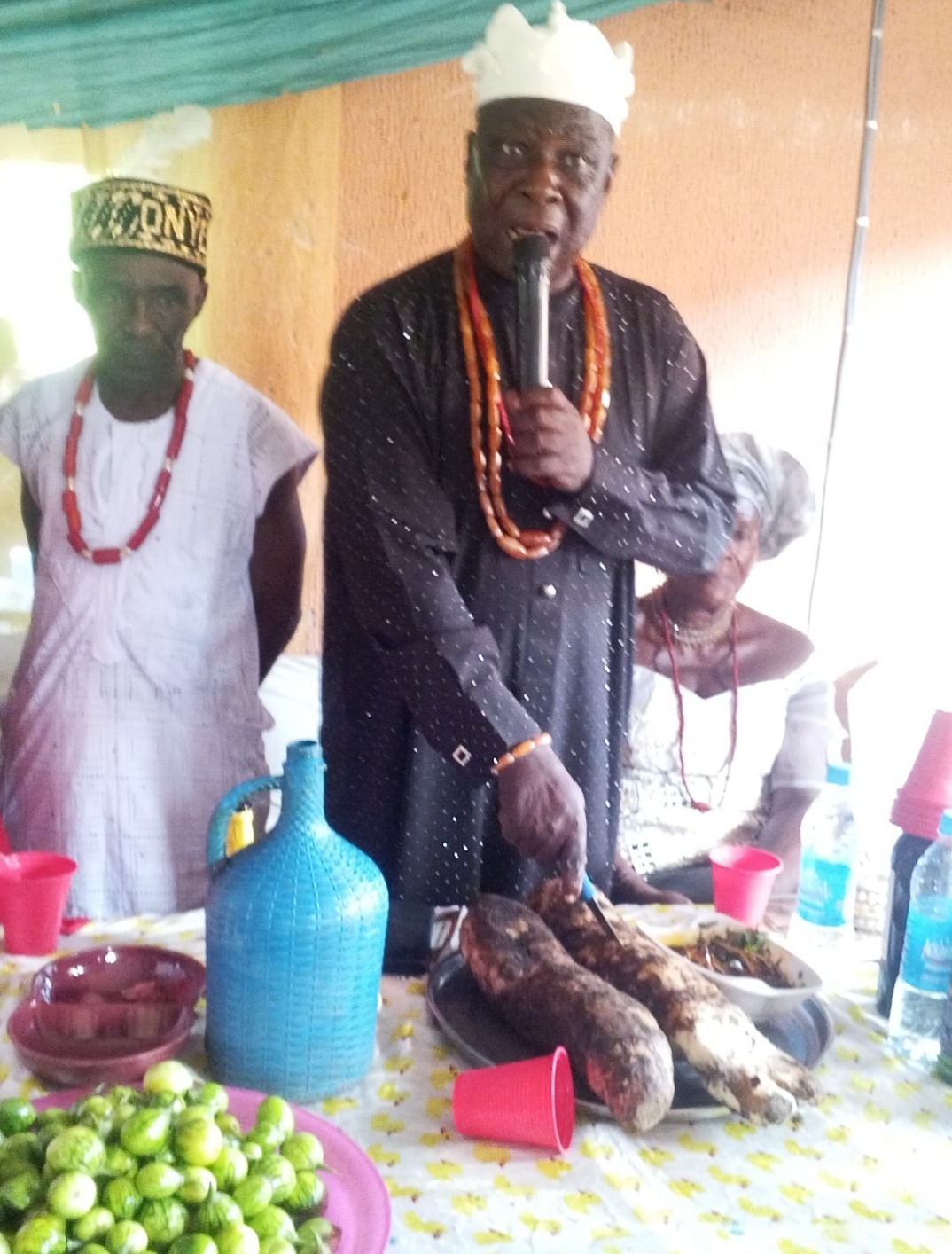
The celebration of the New Yam Festival by Ndi Uturu in Onitsha, Anambra State, on October 4, 2026, ought to have been an occasion of pride, cultural reaffirmation and a powerful demonstration of the enduring identity of the Uturu people.
It came shortly after Ndi Uturu in the ancient kingdom celebrated their traditional Irìjí Uturu on September 13, 2026.
The decision by the Onitsha branch of the Uturu Development Association of Nigeria (UDAN) to celebrate the festival was, in itself, commendable. It demonstrated an appreciation of the importance of reconnecting with the land, agriculture, ancestors, community and the cultural heritage of Uturu.
But there is a fundamental question that Ndi Uturu must not run away from:
When we celebrate our culture, are we actually celebrating our culture—or are we merely borrowing somebody else’s identity and attaching the name Uturu to it?
This question becomes necessary because the Onitsha celebration, rather than sufficiently reflecting the established cultural character of Uturu’s Irìjí tradition, appeared to depart from practices historically associated with the festival in Uturu.
For generations, Awohi and Ibibe have been central to the traditional celebration of Irìjí Uturu. They are not meaningless rituals or outdated practices invented by people who did not understand their own society.
They are part of the cultural inheritance handed down by the forefathers of Uturu.
Our ancestors were not foolish.
They understood their environment, their history, their values and the symbolism embedded in their ceremonies.
If they established particular ways of celebrating Irìjí, those practices deserve to be understood before they are discarded, modified or replaced.
This is not an argument against cultural evolution. Culture evolves. Every living society changes. But evolution must not become cultural amnesia, and modernisation must not become self-rejection.
The Danger of Cultural Inferiority
What is increasingly troubling is the apparent tendency among some of our people to believe that what belongs to others is more prestigious than what belongs to us.
Why should Ndi Uturu feel compelled to copy another community before a celebration can be considered beautiful, modern or acceptable?
Why should we abandon elements that distinguish our Irìjí from those of other communities simply because another form of celebration appears more popular?
A people who continually borrow the identity of others will eventually struggle to explain their own identity.
Uturu is not an insignificant community.
Uturu is an ancient kingdom with a rich history, remarkable people and a reputation that extends far beyond its geographical boundaries. Ndi Uturu have distinguished themselves in academia, business, industry, public service, politics, professional practice and other fields.
Uturu is a brand.And if Uturu is a brand, then its culture is part of that brand.
The way we speak, the way we celebrate, the way we honour our ancestors, the way we preserve our institutions and the values we transmit to our children all contribute to what Uturu means to the outside world.
We therefore cannot build a powerful modern identity while simultaneously weakening the cultural foundation upon which that identity rests.
Culture Is the Memory of a People
Culture is much more than food, dancing, costumes, music or festivals.
Culture is the collective memory of a people.
It tells us who we are, where we came from, what our ancestors valued and what we owe to those who will come after us.
Tradition provides the bridge between generations. It allows the living to inherit knowledge from the dead and pass it on to the unborn.
Custom provides the framework through which communities express their identity and organise relationships.
Values provide the moral compass that tells a people what they consider honourable, respectable, responsible and worthy of preservation.
That is why the preservation of culture matters.
A society can modernise its technology without abandoning its identity. It can embrace education without abandoning its history. It can become globally competitive without becoming culturally rootless.
Indeed, the strongest societies are those capable of looking forward without forgetting where they came from.
Why Does the World Celebrate Culture?
There is a reason the international community places enormous emphasis on cultural heritage, diversity, indigenous knowledge, languages and traditional practices.
The world understands that when a culture disappears, humanity loses something that can never be completely recovered.
Cultural heritage preserves knowledge about agriculture, food, architecture, music, medicine, craftsmanship, environmental management, conflict resolution, social organisation and community life.
Cultural celebrations also provide younger generations with an opportunity to encounter their heritage,not merely through textbooks, but through lived experience.
The purpose of cultural celebration, therefore, is not simply entertainment.
It is preservation, education, identity, continuity and transmission.
When a community celebrates its festival correctly, it is effectively telling its children: “This is who we are. This is where we came from. These are the values our ancestors left for us. This is what we must understand, preserve and responsibly transmit to the next generation.”
That is the deeper meaning of Irìjí.
The Onitsha Celebration Should Become a Moment of Reflection
It is particularly unfortunate that concerns about the form and identity of the celebration had already been raised.
The President General of UDAN, Dr Chidi Mba, had reportedly drawn attention to the distinction between Iwa Ji and Irìjí Uturu, stressing that Uturu has its own established way of celebrating Irìjí, including the traditional significance of Awohi and Ibibe.
That warning should not be interpreted as an attempt to prevent Ndi Uturu outside the kingdom from celebrating.
Far from it.
Every branch of UDAN should be encouraged to celebrate Uturu.
But wherever Ndi Uturu gather in the name of Uturu, they have a responsibility to represent Uturu correctly.
A branch of a community association cannot celebrate in a manner that disconnects the celebration from the very community whose name it carries.
This is particularly important for the Onitsha branch, which is one of the largest and strongest branches of UDAN, comprising accomplished men and women, respected professionals and, importantly, members connected to traditional institutions.
Such a branch should be at the forefront of cultural preservation.
This Is Not About Roasted Yam Alone
The argument should not be reduced to whether yam was roasted or prepared in another manner.
The deeper issue is cultural identity and authenticity.
A festival is a language.
Every element of a traditional festival communicates something,its name, rituals, food, music, dances, attire, greetings, ceremonies, symbols and sequence.
Remove enough of those elements and eventually the festival may retain its name while losing its identity.
That is the danger.
We must therefore distinguish between adapting culture and replacing culture.
Adaptation is healthy.
Replacement is dangerous.
There is nothing wrong with introducing modern music, improved organisation, technology, better event management or contemporary forms of presentation where appropriate.
But the traditional core must not be sacrificed merely because another community does things differently.
Our Ancestors Deserve Understanding, Not Ridicule
Ndi Uturu must also resist the temptation to dismiss traditional practices as primitive simply because they belong to an earlier generation.
Our ancestors lived in a different historical environment, but that does not mean they lacked wisdom.
Before abandoning a traditional practice, we should ask:
Why was it created?
What does it represent?
What historical event does it commemorate?
What value does it transmit?
What does its disappearance mean for the next generation?
Only after asking those questions can we responsibly decide whether a tradition should be preserved, modified or abandoned.
And where a practice is harmful or incompatible with modern human dignity, it should certainly be rejected.
But where a practice simply makes us different from others, difference should not be mistaken for backwardness.
Uturu Must End the Culture of Cultural Inferiority
The greatest challenge confronting us may not be external.
It may be the complex we have developed about ourselves.
Why must Ndi Uturu constantly imitate others?
Why do we sometimes believe that another community’s way of doing things is automatically superior?
Why are we sometimes uncomfortable with the things that make us uniquely Uturu?
A people should be proud of their identity without looking down on the identity of others.
Respecting another person’s culture does not require abandoning ours.
We can admire Onitsha, Awka, Nnewi, Nsukka, Aba, Owerri or any other community without attempting to become them.
Uturu is Uturu.
And Uturu should be proud to be Uturu.
A Call to Ndi Uturu
The recent experience should therefore become an opportunity for serious cultural introspection.
Ndi Uturu should consider developing a comprehensive Uturu Cultural Heritage Framework documenting the customs, traditions, festivals, ceremonies, symbols, historical narratives, traditional institutions and values of the ancient kingdom.
The knowledge of elders should be documented before it disappears.
Young people should be taught the meaning behind Uturu’s traditions.
Traditional rulers, community leaders, academics, historians, cultural custodians and Ndi Uturu should work together to establish what constitutes authentic Uturu cultural practice while allowing responsible contemporary adaptation.
Branches of UDAN across Nigeria and the diaspora should be encouraged to celebrate, but such celebrations should reflect the identity and traditions of Uturu.
A cultural festival should not simply carry the name Uturu.
It must look, sound and feel like Uturu.
The Time for Cultural Reawakening Is Now
The question before Ndi Uturu is no longer whether we should preserve our culture.We must.
The question is whether we will preserve it deliberately or accidentally lose it through neglect, imitation and cultural insecurity.
Every generation is a custodian of its people’s heritage.
The present generation of Ndi Uturu has inherited a cultural identity from its ancestors. We did not create it. We are only temporary custodians of it.
One day, we will hand it over to our children.
The question is:
What exactly will we hand over?
Will we give them an authentic Uturu identity, or a diluted version assembled from the traditions of other communities?
Will they know why Uturu celebrates Irìjí the way it does?
Will they understand Awohi and Ibibe?
Will they know the stories behind our customs?
Will they be proud to say, “This is Uturu”?
These are questions that demand honest answers.
Uturu does not need to copy others to become great.
We must celebrate others without losing ourselves. We must modernise without becoming rootless. We must evolve without erasing our history.
Culture is not a burden.
Tradition is not an embarrassment.
Custom is not a sign of backwardness.
They are the inheritance that tells a people who they are.
And for Ndi Uturu, the message should be clear: Let us stop apologising for being Uturu. Let us understand our culture, protect our values, preserve our traditions and proudly pass them on.
Uturu must not merely celebrate its name. Uturu must celebrate its identity.