


Bart Nnaji: Celebrating an Iconic Alchemist at 69
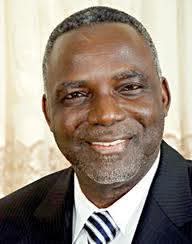
Bart Nnaji
By C. Don Adinuba
On Tuesday, July 1, while traveling with Professor Bart Nnaji from Enugu to Aba, his phone rang constantly. As is typical of him, he answered every call,responding to each caller with patience, care, and courtesy.
One call in particular caught my attention, a widow from his rural community sought his intervention. Her late husband’s kinsmen were threatening to seize her ancestral compound, leaving her and her grown children effectively homeless.
Concerned by such an oppressive development, Nnaji immediately made inquiries. It turned out that the kinsmen were not truly interested in taking the land. Rather, they were expressing resentment. Since her husband,an accomplished and well-educated professional passed away a decade ago, the widow and her children had stopped visiting the village, despite living just 20 minutes away in Enugu.
The threat of property seizure was a coercive tactic to compel them to reconnect with their roots and community.
Why did the widow turn to Bart Nnaji for help? Certainly, his prominence as a former Minister of Power, and earlier, Minister of Science and Technology, makes him the most influential figure in Umuode, a small community in Nkanu East Local Government Area of Enugu State. But more compelling is the fact that Nnaji, little known to most Nigerians in this regard, serves as chairman of his community’s land committee,a position he holds with great seriousness. It is one of several leadership roles he fulfills, alongside his chairmanship of the NLNG Prize for Science Committee and the Governing Council of Bells University of Technology.
Land disputes in southeastern Nigeria are notoriously complex and deeply emotional some cases have lingered in court for over a century, with many reaching the Supreme Court. That Nnaji travels to his village bia-weekly, holding meetings with everyone from peasant farmers and palm wine tappers to civil servants and university professors, speaks to the depth of trust placed in him and his own commitment to community service.
Just four days before the widow’s call, Nnaji had been in Abuja for the 25th anniversary of the African Export-Import (Afreximbank). He served on a panel of distinguished experts including former President Olusegun Obasanjo discussing strategies for Africa’s accelerated development.
His interest in Afreximbank is more than academic. The bank provided the $50 million facility that helped revive and complete the $800 million Aba Integrated Power Project, developed by Geometric Power, a company he founded and chairs.
Today, the Aba project stands as the largest private investment in southeastern Nigeria and the country’s most advanced integrated power infrastructure. Unlike Egbin Power Plant, owned by Sahara Energy and linked to the national grid, electricity generated by Geometric Power is distributed directly within a ring-fenced zone comprising nine of Abia State’s 17 local government areas ensuring uninterrupted supply to the region.
What makes Nnaji exceptional is his ability to engage meaningfully in both grassroots and global spheres. In 2012, he brought Jeff Immelt then CEO of General Electric, then the world’s most valuable and admired company to Nigeria. It was Immelt’s first and only visit to Africa.
This rare ability to operate with ease across vastly different levels of engagement is what leadership scholars David Rooke and William R. Torbert term the “Alchemist Action Logic.” In a landmark 25-year study published in the April 2005 edition of Harvard Business Review, Rooke and Torbert identified the alchemist as a leader with “an extraordinary capacity to deal simultaneously with many situations at multiple levels… someone who can talk with both kings and commoners, address urgent priorities without losing sight of long-term goals.”
The study, which tracked thousands of leaders over a quarter century, identified only six true alchemists,among them Nelson Mandela. It was Mandela, after all, who could wear the Springbok rugby jersey, once a symbol of apartheid, and with a simple fist raised in defiance, transform its meaning. As Tokyo S@xwale, a senior ANC leader, observed, “Only Mandela could wear the enemy jersey. All those years in the underground, in prison, in self-denial it was worth it. That’s all we wanted to see.”
If Mandela was the world’s foremost alchemist, then Nnaji is one of Africa’s finest living embodiments of that archetype not so much a man of contradictions, but a tapestry woven from multiple threads. Once, it was widely believed that sports stars could not excel academically. Nnaji shattered that myth, earning a fully-funded scholarship to the United States where he distinguished himself both in athletics and academics. Many still stereotype scientists as eccentric or socially awkward; Nnaji, a globally recognized engineer and inventor, is refined, socially engaged, and intellectually versatile. It’s also often said that scholars make poor entrepreneurs—but Nnaji has built a world-class business from the ground up.
On Sunday, July 13, as he marks his 69th birthday, we celebrate a man who has long been decorated among other honours with the World Bank/IMF African Scientist of the Year Award. To a truly outstanding African leader, scientist, entrepreneur, and servant of his people: Ad multos annos.
C. Don Adinuba
Former Commissioner for Information & Public Enlightenment, Anambra State.