

The Feast of All Souls: Death Has No Dominion
Revernd
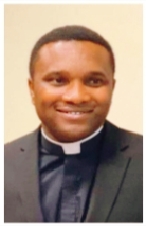
Fr. George Adimike
The Church, in her profound wisdom, celebrates both the living dead,the saints and the holy souls in purgatory with a resounding proclamation of faith: death does not have the final word, and it will never have dominion. Though our loved ones are no longer physically with us, love endures. We do not cease to love because they are absent from our sight; rather, our love persists because we are spiritual beings, capable of transcending the limits of the physical world.
The human spirit, endowed with the power to abstract, remember, and love beyond material constraints, retains the presence and consciousness of those we cherish. Thus, our departed loved ones are not mere ashes lying in graves; they remain integral members of our family and continue to participate in our communal life on a higher plane. Those sealed with the mark of Christ bear that indelible sign of belonging forever.
Through the Feast of All Souls, the Christian faith proclaims the boundless love and mercy of God, which transcends time and space. His mercy, unconfined by earthly dimensions, endures forever (cf. Psalm 136) and reaches even into what might be called “the realm of the living dead.”
This celebration reflects the hope of believers who, by listening to the gentle promptings of the Spirit and following the Word of God, trust that they will never be abandoned by Him, despite their imperfections. It is a hope that extends to our departed brothers and sisters,that, because of their faith and love for God, they too will not be forsaken but will instead experience the fullness of His mercy and the warmth of His eternal embrace.
Moreover, this feast is an expression of communion in love, deepening our understanding of life’s mystery. It proclaims that our bonds of affection are not dissolved by death but endure across realms. Through prayer, remembrance, and fidelity to faith, we celebrate the timeless nature of love a love that refuses to yield to decay. As St. Paul declares, “death will have no dominion” (Romans 6:9).
The Resurrection of Christ stands as the ultimate testament to this truth. Raised from the dead by the Father through the power of the Holy Spirit, Christ conquered death once and for all (cf. Rom. 6:9). In Him, the human person is revealed as one who endures beyond the dissolution of the body. Death, therefore, marks not annihilation but transformation—a passage into a new state of existence.
To attain perfect communion with God, the faithful undergo purification through the fire of Christ’s love, preparing them for the beatific vision. For those who belong to God, death signifies only the close of an earthly chapter; life itself continues, sustained by the Creator who holds dominion over all. As the Church affirms, “life is changed, not ended.” God—the author and sustainer of life—remains the sole Lord of existence, even beyond the grave.
Thus, God, not death or the devil, holds dominion. Death is not destruction or annihilation but transformation ,a change of address. With this conviction, Christians celebrate the Feast of All Souls, honouring the holy souls of the faithful departed, whether in heaven or in purgatory. This sacred observance affirms that the mercy of God penetrates even the darkest corners of human experience, reaching beyond the threshold of death itself.
While Scripture teaches that there is no repentance in the grave, the Church also proclaims that forgiveness extends beyond it. God’s mercy, co-eternal with His being, knows no boundaries or limitations. Though death inflicts the sharp pain of separation, it is tempered by the Christian’s hope in divine compassion—the hope that the eternal Judge will purify rather than condemn, perfect rather than destroy (cf. 1 Cor. 3:14–15; 1 Peter 3:19–20).
Ultimately, death will have no dominion. Love, mercy, and divine life will prevail—for only God endures forever.
Fr. George Adimike
findfadachigozie@gmail.com