



SPARK 2 Drives Improved Community Engagement, Accountability in Anambra PHCs
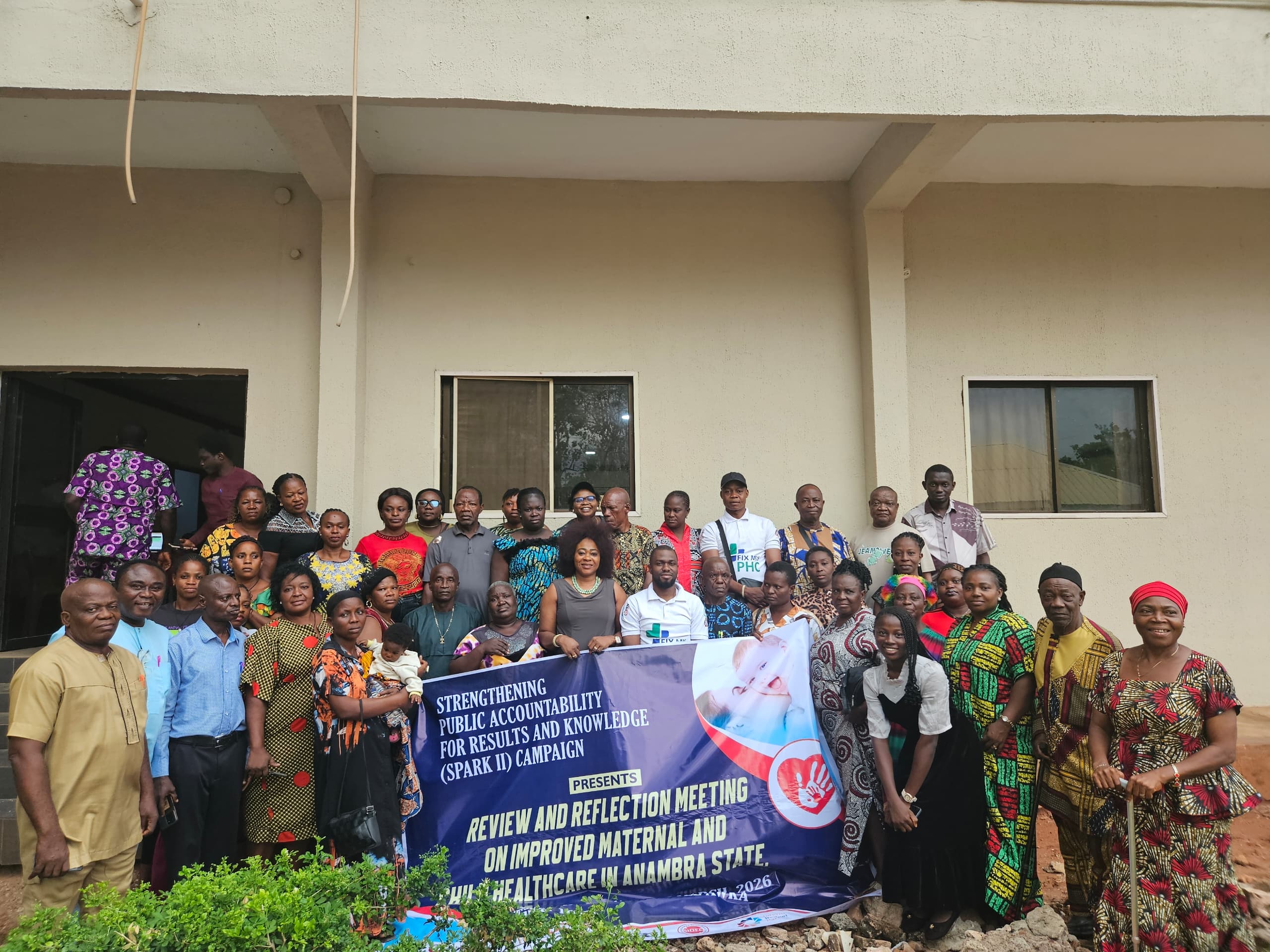
Stakeholders in Anambra State have reported improved service delivery and stronger community engagement in primary healthcare centres (PHCs) following the implementation of the Strengthening Public Accountability for Results and Knowledge (SPARK 2) Project.
The feedback emerged during a review and reflection meeting on PHC system strengthening, where implementing partners and community representatives assessed progress made over the past year.
The event was organized by Justice Development and Peace Caritas (JDPC Nnewi) in partnership with Social and Integral Development Centre (SIDEC).
Executive Director of SIDEC, Mrs Ugochi Ehiahuruike, said the meeting was convened to evaluate outcomes and identify future priorities after the project’s initial implementation phase.
She explained that although the core campaign ended in December, a three-month extension allowed partners to consolidate interventions and review their impact.
According to her, the review focused on assessing the roles of local government authorities, health officials, and community members, particularly those trained under the project.
“We trained community members on the roles and responsibilities of Ward Development Committees (WDCs), leadership, and how to effectively engage government actors,” she said.
Ehiahuruike noted that the intervention has led to improved relationships between WDCs and Officers-in-Charge (OICs) of PHCs, resulting in better collaboration and responsiveness.
She added that health officials have also acknowledged the project’s role in complementing government efforts to improve service delivery across PHCs in the state.
Programme Manager for SPARK at JDPC Nnewi, Mr Onyekachi Ololo, said SPARK 2 focuses on improving maternal and child health outcomes by strengthening community participation and accountability.
“The SPARK 2 Project is implemented in Anambra State by four partners—Justice Development and Peace Caritas (JDPC), SIDEC, Civil Rights Concern (CRC), and Community Empowerment Network (COMEN)—with support from the International Budget Partnership.
Ololo said the project has equipped community members with the knowledge to track health budgets, monitor PHC services, and report gaps to relevant authorities. “In Nigeria, maternal mortality remains high. What we are doing is contributing to efforts to address this by building community capacity to demand better services.”
He added that findings from community monitoring have highlighted key challenges, including unsafe abortion practices and gaps linked to unregulated traditional birth services.
Ololo noted that increased collaboration between WDCs and PHC officials is helping to address issues more promptly, as both parties now have better understanding and trust.
He said the project is also working to improve health-seeking behaviour, encouraging pregnant women to access antenatal care services and utilise government health programmes to reduce out-of-pocket expenses.
Some community representatives at the meeting attested to the impact of the intervention.
Chairperson of WDC 7 in Woliwo community, Onitsha, Mrs Ijeoma Okafor, said the project has significantly improved awareness and participation in healthcare programmes.
She said local leaders, including government officials and religious figures, are now actively engaged in promoting the initiative. “SPARK 2 has improved services at the health centres in our community. People are testifying to the changes,” she said.
Similarly, the Coordinator of Community Empowerment Network in Ogbaru Local Government Area, Mr Innocent Omebu, described the intervention as impactful, noting that it has helped address long-standing gaps in community involvement.
He said communities have embraced the programme and expressed interest in its continuation, especially in underserved rural areas.
Omebu, however, stressed the need for sustainability, noting that previous interventions often failed due to lack of community ownership.
He advocated for increased inclusion of women in leadership positions within WDCs, stating that it would strengthen community participation and accountability.
Stakeholders at the meeting agreed on the need to sustain awareness campaigns, deepen community engagement, and expand the reach of the intervention to ensure continued improvements in primary healthcare delivery across the state.