




OPINION: David Umahi and the Court of Public Opinion
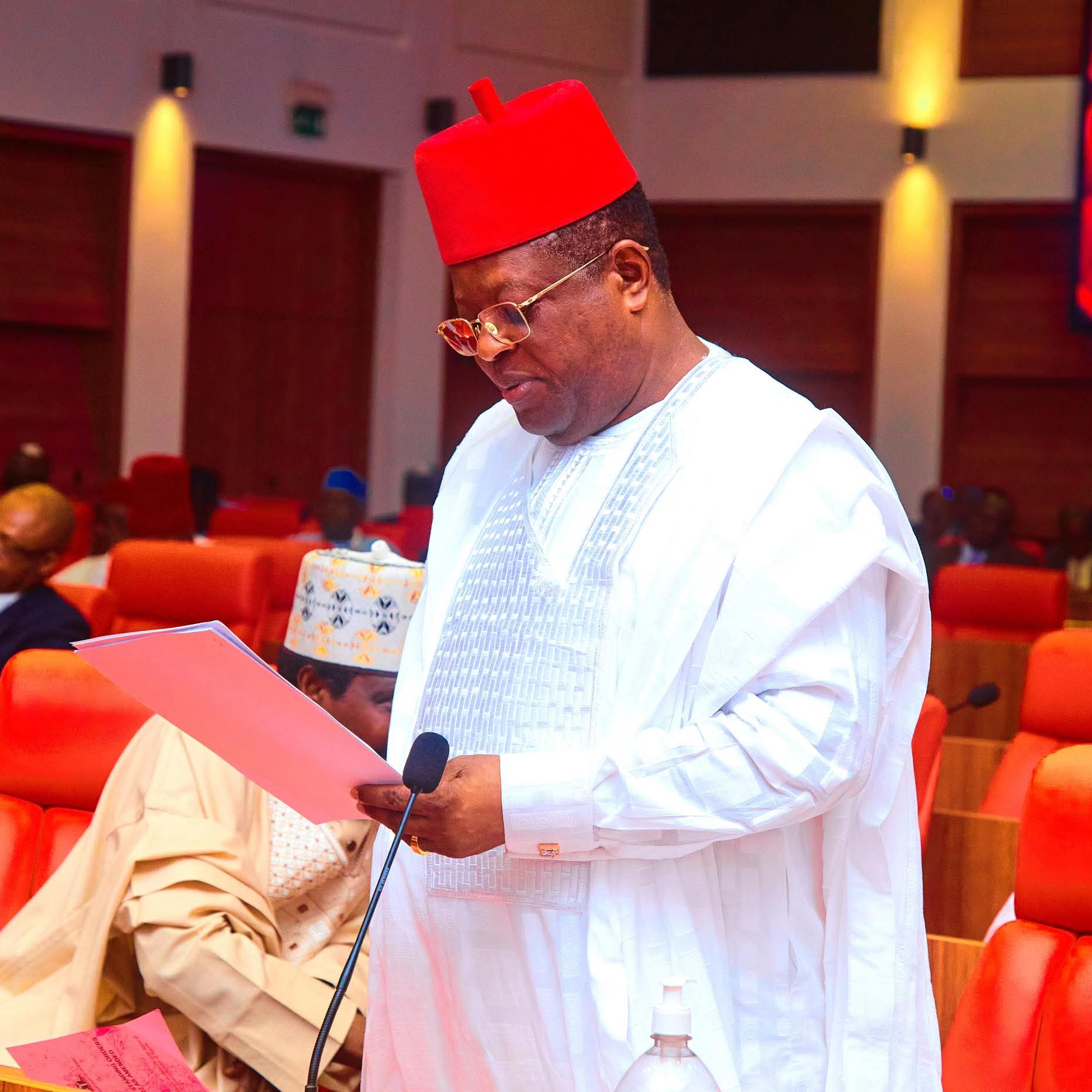
Minister of works, Senator David Umahi
By Titus Eleweke
The tragic demise of 26-year-old nurse Mary Habila, who was attached to the Office of the Minister of Works, Senator David Umahi, has provoked understandable grief and intense public debate.
A young life has been cut short under circumstances that naturally invite questions, and in any civilized society, questions deserve answers. Yet there is an equally important principle that must guide public discourse, questions must never be mistaken for conclusions.
The incident that occurred within the minister’s compound in Uburu, Ebonyi State, and from that moment the court of public opinion convened with remarkable speed. Social media platforms became prosecutors, commentators became judges, and many citizens delivered verdicts long before investigators could establish the facts.
Such is the peril of the digital age, where emotion often outruns evidence and speculation masquerades as truth.
History teaches that public office comes with an invisible burden. Those who occupy positions of influence are not only accountable for their actions but are also vulnerable to suspicion, particularly in politically polarized societies. This is not unique to Senator Umahi; it is a recurring feature of democratic politics. The higher one’s office, the heavier the weight of public scrutiny.
However, democratic accountability is fundamentally different from public condemnation. Accountability requires evidence, transparency, and due process. Condemnation requires only suspicion. The distinction between these two principles determines whether a society is governed by justice or by passion.
Senator Umahi has publicly denied any involvement in the unfortunate incident and reportedly requested that an autopsy be conducted to determine its cause. Reports also indicate that the deceased’s family declined the request, citing cultural and personal reasons and stating that they did not suspect foul play. Whether one agrees with that decision or not, it forms part of the factual landscape surrounding the case. Once the family exercises its legal rights within the framework of the law, public speculation cannot substitute for forensic evidence that does not exist.
This unfortunate episode also exposes a deeper philosophical problem, humanity’s tendency to equate proximity with guilt. The mere fact that a tragedy occurs within someone’s environment does not, by itself, establish responsibility. Civilization rests upon a principle older than politics itself that every individual is presumed innocent until proven guilty through lawful investigation. Once societies abandon that principle, they replace justice with prejudice.
There is another lesson worth reflecting upon. In contemporary politics, public figures often become symbols upon which supporters and opponents project their deepest convictions. To admirers, every accusation is a conspiracy. To critics, every allegation is confirmation of long-held suspicions. Neither position serves the cause of truth. Justice demands intellectual humility,the willingness to admit that we do not yet know everything.
It is also impossible to ignore the role of political polarization. Senator Umahi’s political journey has attracted both admiration and criticism. Such divisions are natural in democracy. Yet personal political preferences should never determine how evidence is interpreted. Facts should shape opinions, not partisan loyalties.
The demise of Mary Habila deserves dignity, seriousness, and truth,not sensationalism. Her memory should not become collateral damage in political warfare or social media speculation. Likewise, no individual, regardless of status, should be declared guilty merely because public sentiment demands a culprit.
The measure of a mature society is not how loudly it reacts to tragedy but how faithfully it upholds justice in the midst of grief. The rule of law exists precisely for moments like this, when emotions are strongest and impartiality is most difficult.
If future investigations uncover evidence of wrongdoing, justice must proceed without fear or favour. If no such evidence exists, then fairness requires that suspicion yield to reason. Anything less diminishes not only the individuals involved but also the integrity of our legal and democratic institutions.
Ultimately, justice is never served by replacing evidence with assumption. A society committed to truth must resist the temptation to convict before it understands. Compassion for the deceased and fairness to the living are not opposing virtues; they are the twin pillars upon which genuine justice stands.