

Prof. Nnodu Unveils Roadmap to Success for Emerging Clinical Researchers and Institutions
By Prosper Okoye
The growing burden of non-communicable diseases, coupled with a shortage of well-trained investigators, has made it increasingly urgent to mentor and train the next generation of clinical researchers in West Africa.
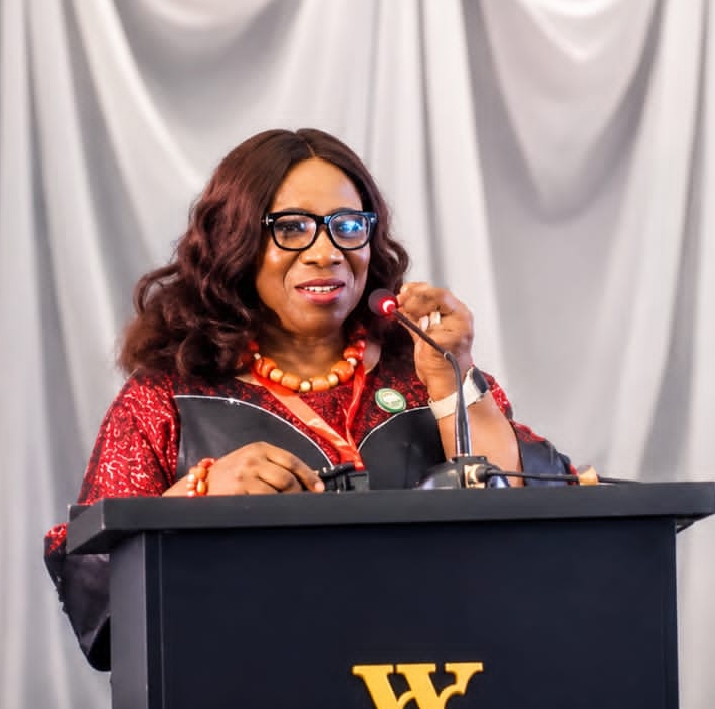
Professor Obiageli Nnodu, Director of Research and Grants at the West African College of Physicians stated this on Monday.
Speaking at a two-day Research Capacity Building and Clinical Research Training Programme in Abuja, Nnodu drew on findings from a genomics study to underscore the limitations of relying solely on research conducted outside Africa. She noted that evidence generated elsewhere does not always adequately reflect the realities, genetic diversity, health systems and specific needs of African populations.
She therefore called for stronger home-grown research capacity and the development of evidence-based solutions that are responsive to the continent’s unique health challenges.
Nnodu also stressed the importance of institutions establishing robust research frameworks capable of positioning investigators to secure grants and other forms of support for their work.
“We cannot solve clinical problems just by doing clinical work,” she said.
For emerging researchers, Nnodu advocated openness to learning, active participation in research networks, pursuit of fellowship opportunities and a willingness to take on assignments while maintaining humility and a commitment to continuous development.
She also urged young investigators to focus on clearly defined research questions that address existing and pressing health challenges, rather than pursuing studies without a clear pathway to impact.
Nnodu, who is also Principal Investigator and Director of the Centre of Excellence for Sickle Cell Disease Research and Training, said the approach had been successfully applied at the centre, where several researchers have benefited from its research capacity-building programmes.
Declaring the workshop open, the Vice-Chancellor of Yakubu Gowon University, Professor Hakeem Babatunde Fawehinmi, identified inadequate research infrastructure and limited practical training as major obstacles to translating Africa’s clinical expertise into internationally competitive research.
Fawehinmi argued that Africa has no shortage of capable clinicians and medical professionals, but lacks the infrastructure, institutional support and specialised training required to transform clinical experience and ideas into rigorous research capable of attracting international funding and meeting global scientific standards.
“This is precisely the gap I believe this programme is built to close,” Fawehinmi said.
He explained that the training would take participants through the research process, beginning with the development of research ideas and the preparation of competitive grant proposals, through scientific dissemination and the conduct of clinical trials.
The programme also covers clinical trial site activation, monitoring, regulatory compliance and close-out procedures, providing practical, competency-based training designed to strengthen the capacity of Africa’s cancer research community.
Fawehinmi linked the initiative to Yakubu Gowon University’s ambition to become a world-class institution, noting that such an aspiration must be supported by a strong community of researchers and early-career investigators capable of competing successfully for international research funding, publishing in leading scientific journals and conducting clinical trials in accordance with global standards.
He said the university’s pursuit of excellence would require sustained investment not only in physical infrastructure but also in people, partnerships and systems that enable high-quality research to thrive.
The programme brings together institutions and organisations including Mayo Clinic, the iCCaRE Consortium, the West African College of Physicians, the Nigerian Cancer Society, the Federal Ministry of Health and the Sickle Cell Research and Training for Africa.
Fawehinmi described the collaboration as a convergence of international and Nigerian expertise, saying such partnerships could play a significant role in strengthening research capacity and creating sustainable pathways for knowledge exchange, mentorship and access to global research opportunities.
Also speaking, Professor Folakemi T. Odedina, Enterprise Deputy Director for Community Outreach and Engagement at Mayo Clinic Comprehensive Cancer Center, challenged researchers and institutions to embrace collaborative approaches to addressing Africa’s complex health challenges.
Odedina advocated what she described as “Consortium Science”—an approach in which researchers and institutions work collectively towards shared goals rather than operating in isolation.
According to her, collaborative research can strengthen communication among investigators, expand opportunities for researchers to gain international visibility and recognition, and accelerate the development of solutions capable of improving health outcomes across the continent.
The approach, she suggested, is particularly important in addressing complex health challenges that require expertise, data, infrastructure and resources beyond the capacity of individual researchers or institutions.
The programme therefore seeks to move beyond conventional research training by equipping African investigators not only with the skills to generate credible evidence, but also with the capacity to build productive research networks, secure international funding, conduct high-quality clinical trials and translate research findings into practical solutions for communities.
At its core, the initiative reflects a broader imperative: Africa must increasingly become a producer of health evidence rather than merely a consumer of research generated elsewhere.
Building that capacity will require skilled investigators, supportive institutions, sustainable funding, strong international partnerships and a culture of collaboration capable of turning locally generated evidence into solutions for the continent’s most pressing health challenges.
